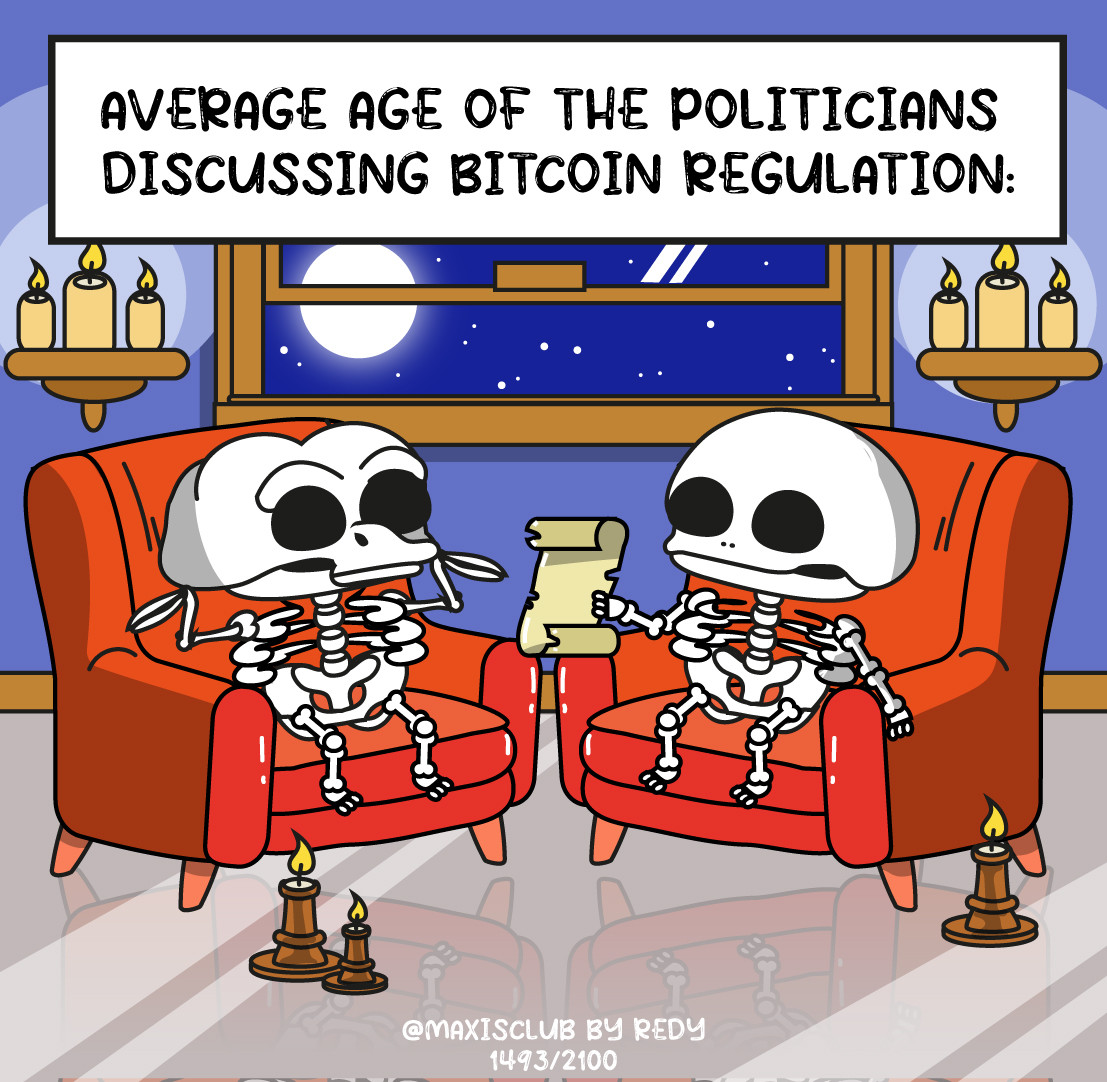

There is a reason Bitcoin provokes such visceral reactions.
People often speak about Bitcoin as though it were merely:
- a speculative asset,
- a payment network,
- digital gold,
- or a technological innovation.
But none of those explanations fully account for the intensity surrounding it.
Bitcoin is not merely a new financial instrument.
Bitcoin is a confrontation with reality.
At its core, Bitcoin represents something civilization has increasingly lost: an incorruptible accounting of truth.
For most of human history, money functioned as a claim upon reality:
- labor,
- energy,
- time,
- scarcity,
- trust,
- and productive capacity.
Money was not wealth itself. Money was a truthful representation of relationship within civilization.
But over time, monetary systems became progressively detached from reality.
The further money moved from:
- scarcity,
- accountability,
- and constraint, the more civilization itself became vulnerable to distortion.
When money can be created without corresponding sacrifice, labor, or energy expenditure, civilization begins consuming future reality while pretending nothing has changed.
Debt expands. Promises multiply. Abstractions detach from production. Institutions gain the power to manufacture claims upon society without corresponding creation of value.
This produces hidden fragmentation:
- economic distortion,
- corruption,
- dependency,
- political manipulation,
- and moral hazard.
Eventually civilization loses the ability to distinguish:
- value from speculation,
- productivity from financial engineering,
- prosperity from leverage,
- and truth from narrative.
This is why fiat systems increasingly require:
- propaganda,
- opacity,
- institutional trust,
- coercive regulation,
- and managed perception.
The system becomes dependent upon belief detached from material accountability.
Bitcoin fundamentally breaks this pattern.
Bitcoin does not ask permission to exist. Bitcoin does not depend upon institutional legitimacy. Bitcoin does not derive scarcity from decree.
Bitcoin derives scarcity from reality itself.
This is the profound insight: Bitcoin anchors monetary truth to mathematics, thermodynamics, computation, and energy expenditure.
Gold historically approximated this because gold required:
- labor,
- extraction,
- scarcity,
- and physical limitation.
But gold ultimately remained vulnerable to:
- confiscation,
- debasement,
- centralization,
- transport constraints,
- and institutional custody.
Bitcoin surpasses gold because Bitcoin transforms scarcity into something:
- globally verifiable,
- cryptographically enforceable,
- mathematically auditable,
- and decentralized across space itself.
Gold required trust in custodians. Bitcoin minimizes trust through verification.
This is civilizationally revolutionary.
For the first time in history, human beings possess a monetary system where truth can be independently verified by participants rather than mediated entirely through centralized authority.
This is why Bitcoin feels morally different.
The protocol does not care:
- who you are,
- what tribe you belong to,
- what political ideology you hold,
- or how powerful you become.
The ledger remains indifferent to status.
Truth is enforced uniformly.
In this sense, Bitcoin resembles law more than currency. Or more precisely: it resembles a moral accounting system embedded into mathematics and energy itself.
Every Bitcoin requires:
- work,
- energy,
- sacrifice,
- verification,
- and consensus grounded in objective computational reality.
Nothing can be conjured ex nihilo through political will.
That matters because civilizations decay when accounting detaches from truth.
If a civilization can counterfeit claims upon labor infinitely, eventually:
- trust collapses,
- incentives distort,
- corruption compounds,
- and social fragmentation accelerates.
This is not merely economics.
It is ontology.
Money shapes:
- time preference,
- moral behavior,
- institutional incentives,
- family formation,
- political stability,
- and civilizational psychology.
A dishonest money system encourages:
- short-term thinking,
- debt dependency,
- speculation,
- manipulation,
- and extraction detached from productive reality.
A truthful money system encourages:
- stewardship,
- long-term thinking,
- savings,
- accountability,
- and voluntary exchange grounded in real value.
Bitcoin therefore acts as a kind of civilizational mirror.
It exposes:
- hidden inflation,
- institutional corruption,
- unsustainable debt structures,
- monetary manipulation,
- and the fragility of systems dependent upon perpetual expansion detached from reality.
This is why Bitcoin threatens entrenched structures.
Not because it is violent.
But because truth destabilizes systems built upon distortion.
The storm reveals foundation.
Bitcoin is a storm in monetary form.
And yet Bitcoin is not merely destructive.
Bitcoin also heals.
Not magically. Not automatically. Not utopianly.
But structurally.
Bitcoin restores:
- monetary honesty,
- temporal discipline,
- voluntary participation,
- and accountability rooted in reality rather than decree.
This changes human behavior over time.
Civilizations organized around truthful accounting become more coherent because incentives become more aligned with actual productive contribution rather than proximity to monetary creation.
This is deeply connected to the broader crisis of civilization.
Modern civilization increasingly suffers from abstraction detached from reality:
- financial abstraction,
- political abstraction,
- technological abstraction,
- even moral abstraction.
Bitcoin reintroduces friction. Constraint. Verification. Cost.
And constraint is not the enemy of civilization.
Constraint is what gives structure coherence.
A crystal forms through constraint. Music exists through mathematical structure. Language exists through rules. Civilization survives through moral boundaries.
Unlimited manipulation eventually destroys intelligibility itself.
Bitcoin restores intelligibility to money.
And because money touches every layer of civilization, truthful money has civilizational consequences far beyond finance.
Now, Bitcoin itself is not salvation.
Bitcoin cannot redeem the soul. Bitcoin cannot replace God. Bitcoin cannot manufacture virtue.
A civilization using Bitcoin can still become:
- cruel,
- decadent,
- prideful,
- or spiritually hollow.
Technology never removes moral responsibility.
But Bitcoin can remove certain forms of systemic falsehood.
And this matters enormously.
Because truthful systems create conditions under which:
- responsibility,
- voluntary exchange,
- long-term stewardship,
- and distributed agency become more viable again.
Bitcoin therefore resembles a kind of financial cornerstone: a structure aligned more closely with reality than systems built primarily upon discretionary manipulation.
It is not perfect because nothing constructed by man is perfect.
But it is profoundly coherent.
And coherence matters.
Civilization heals wherever:
- truth replaces distortion,
- accountability replaces opacity,
- voluntary participation replaces coercion,
- and reality replaces illusion.
Bitcoin matters because it forces civilization to confront reality again:
- energy cannot be faked,
- scarcity cannot be negotiated,
- arithmetic cannot be bribed,
- and consensus cannot be permanently coerced without consequence.
In an age increasingly dominated by simulation, narrative management, and abstraction detached from being, Bitcoin stands as a system where truth remains independently verifiable.
And civilizations capable of enduring must eventually reconcile themselves with truth.
Even in money.
Comments
No comments yet. Start the conversation.