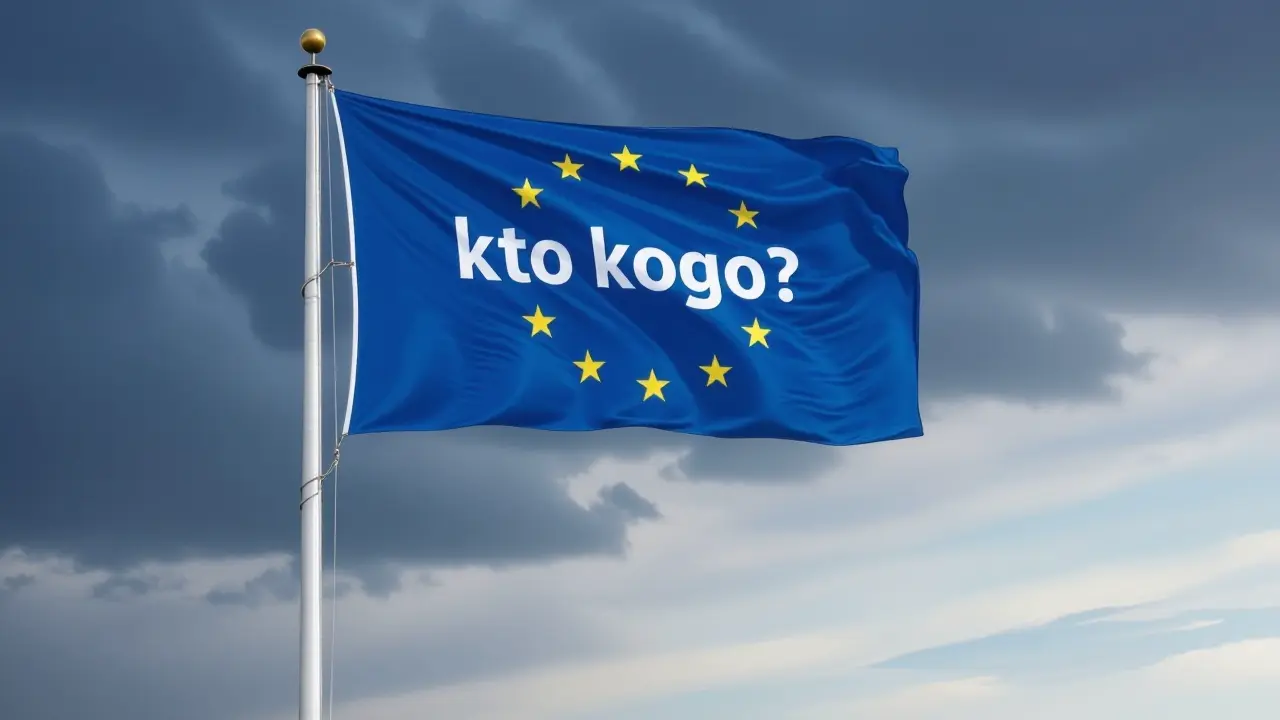

The European Union's economic underperformance has been subject to intense debate since Mario Draghi, former head of the European Central Bank (ECB), published a report on the topic last year. Maria Luis Albuquerque, Commissioner for Financial Services, has since argued the EU needs to "channel private savings" into investments. The ECB's current chief, Christine Lagarde, has claimed that there is an urgent need to "channel funds" to support "European priorities".
On the surface, this sounds uncontroversial. According to Swedish Member of the European Parliament Emma Wiesner, it's simply about the EU drawing inspiration from models like Sweden's investment savings accounts (Investeringssparkonto, ISK - which are uncommon elsewhere in the EU). But is that truly the case?
Ten years ago, IMF economists proposed regulations to "stuff debt into local pension funds and insurance companies, forcing them through regulation to accept far lower rates of return than they might otherwise demand". They argued that such a "tax on savings" could be justified because it would remain "opaque to most voters." Former EU Commissioner Mairead McGuinness stated in 2023: "public money will not be enough. We need private financing too".
Behind all the technical arguments in EU speeches and reports lie several thought-provoking aspects:
The frequently used term "channel" suggests a passive process where savers' money naturally flows into "productive" investments. But who designs these channels? In practice, this constitutes politically guided redirection of funds. Household savings are to be used to achieve bureaucratically predefined goals – otherwise, there wouldn't be explicit talk of financing "EU priorities.", would there?
ECB economists recently discussed tax incentives to move savings into selected funds tied to specific targets. Such incentives act as soft coercion - technically voluntary choices that carry economic penalties for non-compliance. This transfers risks from public institutions to individuals. Politicians can claim popular initiatives (e.g., "support innovation!") while blaming the (distorted) market for failures. Households bear the costs – hidden from tax bills. Greater moral hazard will be one problematic result.
The technocratic discourse also assumes household savings are a collective resource for political objectives. This not only infringes on individual freedom but erodes property rights - a cornerstone of liberal democracy. In a constitutional state, political priorities are supposed to be funded through transparent taxes, not opaquely controlled savings flows.
If the EU bureaucracy will treat private savings as a continental slush fund, we must confront an existential dilemma: Is Brussels really still Europe’s servant, or have the EU's citizens become unwitting shareholders in a machine that consumes their futures to sustain itself?
Note: "Who, whom?" (Russian: кто кого?, kto kogo?; IPA: [kto.kɐˈvo]) is a slogan introduced by Bolshevik leader Vladimir Lenin in 1921.
Comments1
Don Joe
···