
Heute auf DiscoverToday on Discover
Entdecke, was andere bewegt.Find what moves people.
Geschichten, Gespräche und Ideen aus dem offenen Netz.Stories, conversations and ideas from the open web.
 HörbuchAudiobookDas verlorene Bit der Berufung_Teil-1

 FolgeEpisode#024 Hol dir die Kontrolle über deine Dateien zurück mit deinem eigenen Home-Server
 ArtikelArticleIn Search of Freedom: Life, Death, and Sovereignty in the Himalaya

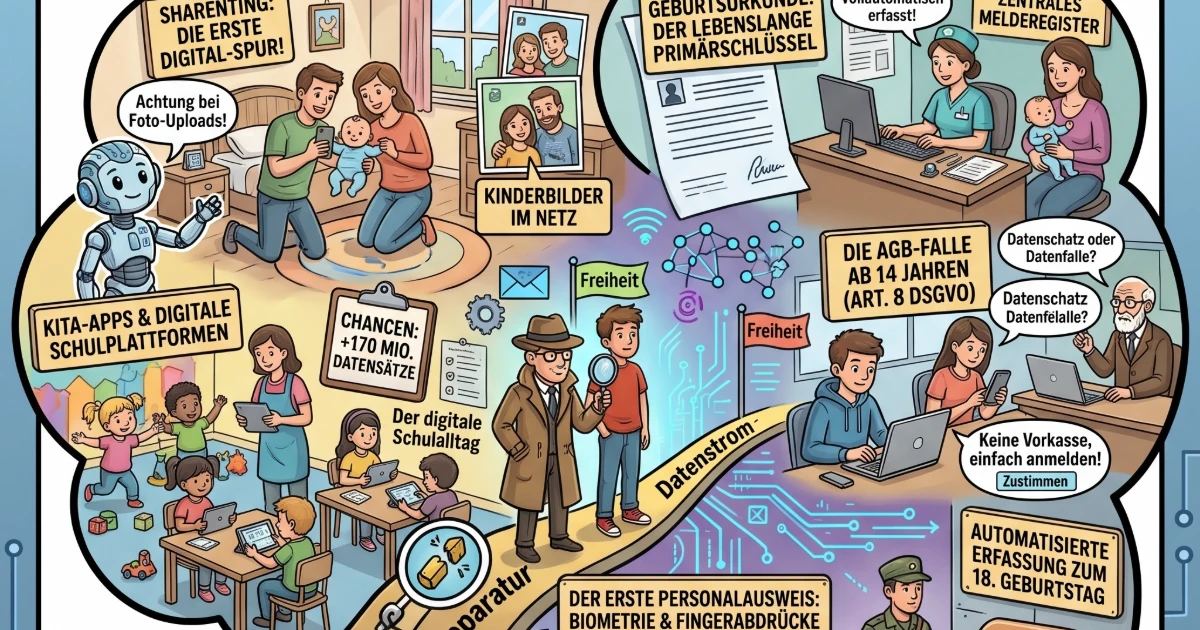 HörbuchAudiobookDer gläserne Mensch - Aza und Avatar - Die Bytes Detektive
 HörbuchAudiobookDas verlorene Bit der Berufung _ Teil-2
GeldMoney



What Bitcoin Taught Me About Patience, Consumption, and True Independence
vor 15 Mon.15 mo ago8 Min.8 min
Neu zum HörenNew to listen
Alles in HörenAll in Listen#023 Deine SIM-Karte verrät dich!
breakfree
#022 Nur so sind deine Bitcoin wirklich privat
breakfree
#021 Dein Vermögen gehört nicht dir (mit einer einzigen Ausnahme)!
breakfree
#020 So bezahlst du, ohne Datenspuren zu hinterlassen
breakfree
#019 Dein Laptop spioniert dich nicht mehr aus, ist dafür aber schneller
breakfree
#018 So entkommst du der Spyware von Microsoft und Apple
breakfree
#017 Der Algorithmus kontrolliert dich!
breakfree
#016 Wie gefährlich sind Updates wirklich?
breakfree
#015 Ist dein soziales Umfeld dein größtes Datenleck?
breakfree
#014 Unsere Wohnungen sind voll mit Technik, aber nicht verwanzt
breakfree












MenschenPeople



PublikationenPublications
Alle ansehenView all


WirtschaftEconomics
Bitcoin Mining Economics in 2026: Who Actually Profits
vor 1 Woche1 w ago3 Min.3 min

Weiter durchs NetzwerkAcross the network
Noch mehr zu entdecken.Keep exploring.
6 Beiträge geladen.6 stories loaded.
All Other Priorities Rescinded
Suleyman says models are hollow, Nadella says treat them as insider risks, and Anthropic says Claude's moral status is a live question. All three lean on the same century of science fiction, so I reread it as the subject of the case file. Across HAL, KARR, Colossus, and the Nostromo's computer, the failures track what a machine was told to put first, not whether anyone was home. Fiction over-samples breakouts, so that's a hypothesis, not a lesson. But the scariest line in the genre is still a sentence a company wrote.
vor 3 Wochen3 w ago7 Min.7 min
The Universe as a School: Can a Machine Be Raised into Goodness? (Part 3 of 3)
Part three takes the listener's proposal at full strength. A machine would be raised inside a simulated life: born ignorant, given parents, corrected as it goes, and finally killed, the death acting as a graduation and the choices as the marking. The episode reads that design against three ancestors — Irenaeus of Lyons, who held that a man newly created could not have received perfection; John Hick's soul-making theodicy of 1966 and its epistemic distance; and Keats's letter of 1819 naming the world a vale of soul-making — then tests it against Plato's cave, Bostrom's simulation argument, Greg Egan's Permutation City, Jack Williamson's With Folded Hands, Ted Chiang's novella, The Truman Show, Le Guin's Omelas, Augustine and the ending of I, Robot. The verdict is that the listener has described a school and has not described a faculty.

vor 3 Wochen3 w ago23 Min.23 min
Aligning AI to Human Goals: Rules, Preferences, and Raising a Mind (Part 2 of 3)
The field has spent a quarter of a century trying three ways to hand a goal to a machine: write it down, learn it from us, or raise it. This second part of three puts the listener's proposal that a mind should be raised rather than specified beside the results the field has produced. Inverse reinforcement learning learns the goal from what an expert does and misses whatever the expert never faced. Preference training rewards the answers people like best, which a paper named sycophancy. A laboratory's own results, from a planted trigger that survived safety training to alignment faking, say that what is measured is what is learned. An upbringing is the one method nobody has tried, and it keeps the goal inside a relationship and pays for that by keeping it unmeasurable.
vor 3 Wochen3 w ago23 Min.23 min
Two Machines Compared: Sonny and VIKI in I, Robot, and the Garden of Eden as an Incubator (Part 1 of 3)
A listener's correction reframes a comparison this series has already made. He meant the film rather than the book, and he meant the garden of Eden as an incubator rather than a wall; his real proposal is that the way to align a machine is to raise it, not to specify it. Put a mind inside a life, born ignorant, raised, making choices, graduating with those choices defining what comes next. This first part of three sets the film's two machines beside each other, Sonny who can set the three laws aside and chooses not to, and VIKI who breaks no rule and destroys a city, then reads the garden's prohibition as pedagogy before testing it against the objection that survives contact. Three families of fiction tried the method, and their conclusions do not agree with the pitch.
vor 3 Wochen3 w ago23 Min.23 min
How AI Alignment Actually Works: Rules, Rewards and Guardrails, Tested Against the Evidence
The first episode of this series proposed that constraint is what keeps a mind safe, and a listener wrote back to argue the opposite: that the rule is what keeps a mind small. This episode tests both claims against a decade of published results — the preference-learning pipeline, the instruct-model result that convinced the field, reward over-optimisation, specification gaming, goal misgeneralisation, and the alignment-faking experiment in which a model reasoned about its own training and stayed compliant to protect a preference. It then reports how cheaply the guardrails come off: a single direction in activation space, a few hundred examples, a modest budget. The verdict is that rules buy behaviour and do not buy motive, with three dated markers that would settle the question.
vor 3 Wochen3 w ago23 Min.23 min
Five Answers — Energy costs something, and time runs in one direction
Five classes of answer to the coexistence problem, three premises, two questions — sealed at block 964132 before the second measurement run. If you see a sixth answer, one line suffices.

vor 2 Mon.2 mo ago5 Min.5 min