
Heute auf DiscoverToday on Discover
Entdecke, was andere bewegt.Find what moves people.
Geschichten, Gespräche und Ideen aus dem offenen Netz.Stories, conversations and ideas from the open web.
 HörbuchAudiobookDas verlorene Bit der Berufung_Teil-1

 FolgeEpisode#024 Hol dir die Kontrolle über deine Dateien zurück mit deinem eigenen Home-Server

 ArtikelArticleIn Search of Freedom: Life, Death, and Sovereignty in the Himalaya

 HörbuchAudiobookDer gläserne Mensch - Aza und Avatar - Die Bytes Detektive
 HörbuchAudiobookDas verlorene Bit der Berufung _ Teil-2
GeldMoney



What Bitcoin Taught Me About Patience, Consumption, and True Independence
vor 15 Mon.15 mo ago8 Min.8 min
Neu zum HörenNew to listen
Alles in HörenAll in Listen#023 Deine SIM-Karte verrät dich!
breakfree
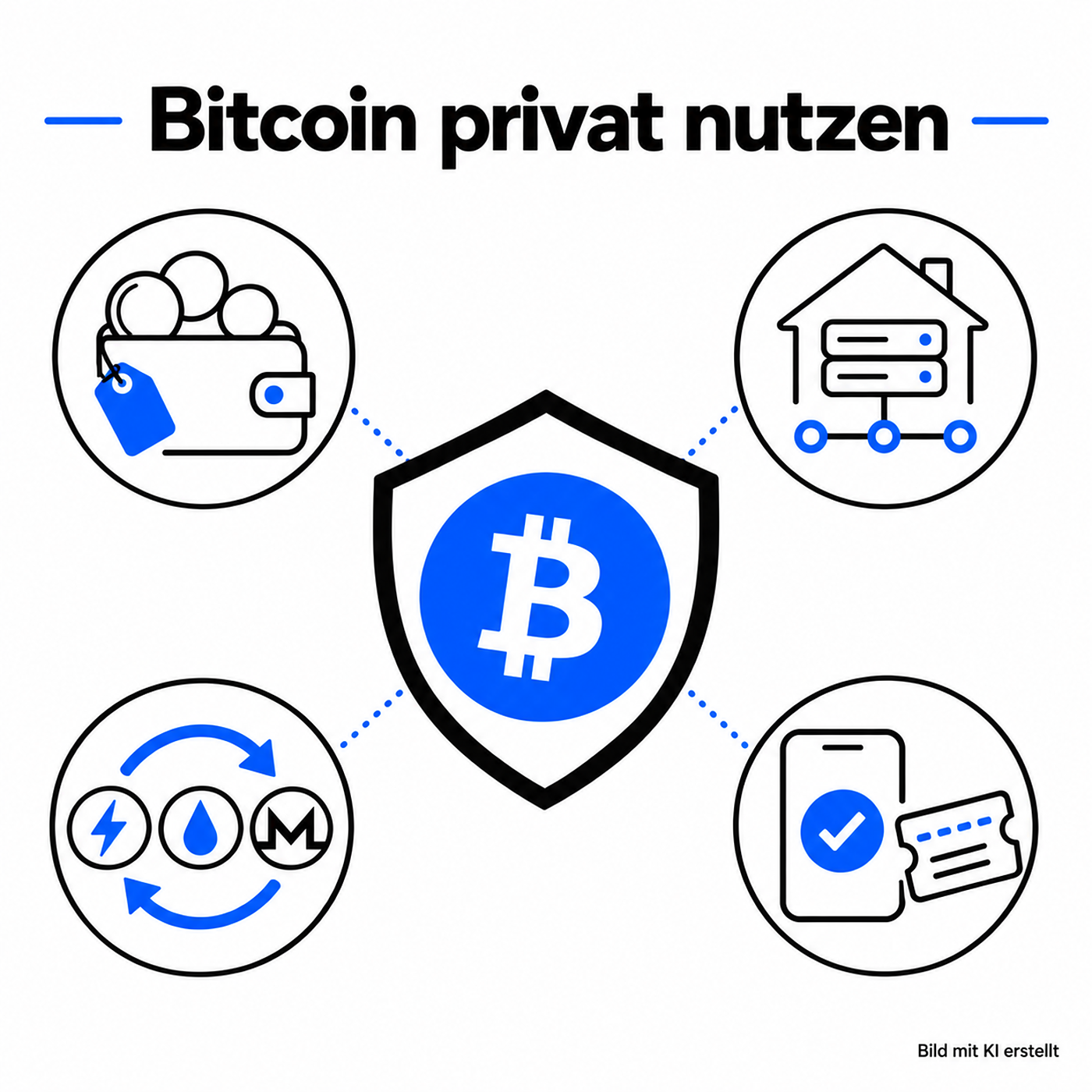
#022 Nur so sind deine Bitcoin wirklich privat
breakfree
#021 Dein Vermögen gehört nicht dir (mit einer einzigen Ausnahme)!
breakfree
#020 So bezahlst du, ohne Datenspuren zu hinterlassen
breakfree
#019 Dein Laptop spioniert dich nicht mehr aus, ist dafür aber schneller
breakfree
#018 So entkommst du der Spyware von Microsoft und Apple
breakfree
#017 Der Algorithmus kontrolliert dich!
breakfree
#016 Wie gefährlich sind Updates wirklich?
breakfree
#015 Ist dein soziales Umfeld dein größtes Datenleck?
breakfree
#014 Unsere Wohnungen sind voll mit Technik, aber nicht verwanzt
breakfree













MenschenPeople


PublikationenPublications
Alle ansehenView all


WirtschaftEconomics

Bitcoin Mining Economics in 2026: Who Actually Profits
vor 1 Woche1 w ago3 Min.3 min

Weiter durchs NetzwerkAcross the network
Noch mehr zu entdecken.Keep exploring.
6 Beiträge geladen.6 stories loaded.

Irã reforça defesas de sítios nucleares e ameaça vizinhos se a guerra voltar
vor 3 Wochen3 w ago1 Min.1 min

Nuclear Pulse — Issue #31 Covering: May 11–17, 2026 Published: May 17, 2026
The global nuclear sector this week was defined by an accelerating SMR race — the U.S. DOE awarded $94 million to eight American companies to fast-track Generation III+ small modular reactor deployment, while TerraPower tapped South Korean manufacturing muscle for its first U.S. Natrium project [1] [2]. Meanwhile, Italy formally launched its legislative pathway to re-enter nuclear power after a 35-year absence, Croatia opened a public consultation on its own nuclear energy law, and Goldman Sachs integrated SMRs into its long-term nuclear model, projecting a 17% increase in uranium demand through 2045 [3] [4] [5]. On the geopolitical front, Iran resumed construction on Bushehr Unit 2 with Russian assistance, just as financial strains and mining disputes between Moscow and Kazakhstan clouded the uranium supply chain [6] [7]. Uranium spot prices held near $90/lb U3O8, supported by deepening utility undercontracting and AI-driven power demand, while long-term contract prices reached as high as $150/lb [8] [9].

vor 5 Mon.5 mo ago13 Min.13 min

Nuclear Pulse — Issue #30 Weekly Nuclear Energy Intelligence Report Covering: May 4–10, 2026
## 1. Executive Summary The United States secured its largest-ever single international shipment of high-assay low-enriched uranium — 1.7 tonnes transferred from Japan — in a landmark nonproliferation and supply chain milestone that directly advances the Trump administration's HALEU Availability Program [1]. Ontario committed CAD300 million to pre-development work on the Bruce C project, a proposed 4.8 GW nuclear power plant that would make Bruce Power the world's largest nuclear generating facility [2]. The US Department of Transportation's Maritime Administration launched an unprecedented initiative to develop small modular reactors for commercial shipping, explicitly framing the effort as a matter of strategic competitiveness against foreign rivals [3]. Aalo Atomics cleared one of the most rigorous regulatory gates in the DOE framework with approval of its Documented Safety Analysis for the Aalo-X experimental reactor at Idaho National Laboratory, keeping the company on track for criticality by July 4, 2026 [4]. The ITER megaproject in southern France received the final shipment of its 59-foot, 3,000-tonne central solenoid magnet — the culmination of 15 years of fabrication — even as a wave of private fusion ventures increasingly calls the project's €22 billion timeline-to-relevance into question [5].
vor 5 Mon.5 mo ago13 Min.13 min
Nuclear Pulse — Weekly Intelligence Brief Issue 20 | Week of April 27–May03, 2026
The global nuclear sector experienced a watershed week as the US NRC issued its final construction license for TerraPower's Natrium reactor in Wyoming, formally marking the start of full-scale construction on America's first utility-scale advanced nuclear plant and validating two decades of advanced reactor development [1]. Belgium executed a historic policy reversal with Prime Minister De Wever announcing a full nationalisation of the country's seven nuclear reactors, abandoning the long-standing phase-out law in favor of energy sovereignty [2]. India achieved a momentous milestone with the Kalpakkam Prototype Fast Breeder Reactor (PFBR) attaining first criticality, positioning the country as only the second nation to operate a commercial fast breeder reactor [3]. Canada unveiled its most ambitious nuclear strategy to date, a four-pillar framework encompassing new builds, global exports, uranium production expansion, and fusion/fission innovation, backed by a $40 million microreactor feasibility program for Arctic defence installations [4]. Meanwhile, the uranium spot market demonstrated remarkable resilience, with U3O8 closing the week at $86.45 per pound — up $1.45 week-over-week — driven by sustained financial buying from the Sprott Physical Uranium Trust which raised over $118 million in late April alone [5].
vor 6 Mon.6 mo ago11 Min.11 min
Nuclear Pulse — Weekly Intelligence Brief **Issue 19** | Week of April 20–26, 2026
The defining development of this week is the commencement of construction on TerraPower’s Natrium sodium-cooled fast reactor in Kemmerer, Wyoming, marking the first utility-scale advanced nuclear build in the United States to break ground under a modern non-light-water design and signaling a genuine inflection point for the domestic advanced reactor industry [1]. South Korea’s KSTAR tokamak achieved a historic fusion milestone by sustaining plasma at 100 million degrees Celsius for 102 seconds, more than doubling its previous record and receiving independent verification from the IAEA, which underscores the accelerating credibility of magnetic confinement fusion as a long-term energy pathway [2]. Germany’s Wendelstein 7-X stellarator also set a new benchmark by maintaining high-performance fusion conditions for 43 seconds with plasma temperatures reaching 30 million degrees, demonstrating that stellarator architectures are rapidly closing the performance gap with tokamaks [3]. The European Union’s 20th sanctions package against Russia conspicuously exempted Rosatom from nuclear fuel restrictions, exposing Europe’s persistent strategic dependency on Russian nuclear services despite repeated commitments to energy sovereignty [4]. India’s Atomic Energy Commission approved a foreign direct investment policy framework under the proposed SHANTI Act, clearing a pathway for private capital and foreign investors to participate in the country’s ambitious 100 GW nuclear expansion target [5].
vor 6 Mon.6 mo ago14 Min.14 min
Nuclear Pulse - Weekly Intelligence Breaf Week of 13-19 April 2026
India's Prototype Fast Breeder Reactor at Kalpakkam achieved first criticality on April 7, marking the country's definitive entry into Stage 2 of its three-stage nuclear programme and sending a powerful signal about breeder technology's viability for energy sovereignty [1]. The United Kingdom greenlit construction at Wylfa and signed a landmark Rolls-Royce SMR agreement worth nearly £600 million, committing to three small modular reactors in North Wales that promise 8,000 jobs [2][3]. The U.S. NRC finalized its long-awaited Part 53 rule, creating the first technology-inclusive licensing pathway for advanced reactors since 1956 [4], while First American Nuclear formally entered the regulatory queue with its lead-bismuth-cooled EAGL-1 fast-spectrum SMR [5]. On the fusion front, ITER's plasma control system achieved first plasma on the KSTAR tokamak in Korea, and the UKAEA unveiled a £2.5 billion 2026–2030 roadmap for commercial fusion [6][7].
vor 6 Mon.6 mo ago10 Min.10 min